Showing posts with label Chinese Medicine. Show all posts

Monday, March 20, 2017

I Made My Own Acupuncture Needle!

For many years now, I had the idea that I would make my own acupuncture needle out of a meteorite.  In ancient times, before the technology of smelting had been discovered, meteorites were one of the only sources of high-purity iron that, through firing and pounding, could be made into steel.  In ancient China, swords that were forged out of meteorite iron were considered to be not just functionally exceptional - harder, sharper, less apt to break in combat - but endowed with celestial powers as well.  It is hard to believe that acupuncture needles, associated from the very beginning with stars and the cosmos, would not have been made from meteorites.  The acupuncture points on the human body were regarded as a microcosm of the stars in the heavens.  What better instrument to illuminate our corporeal stars than a sliver of condensed heavenly yang qi?

Meteorite chunk
Last year I turned fifty, and as part of the year-long celebration, went on a camping trip with my old friend Andy McKenzie.  I drove from Santa Cruz and he drove from Fort Worth, Texas, and we met up at Zion National Park in Utah. On a day trip to Bryce Canyon, we pulled into one of the many rock and mineral stores that dot the Southwest.  Inside, I found small chunks of meteorite on sale, and thought, "Aha! Finally, the raw material for my needle!" and bought a couple.


The Micro-Forge

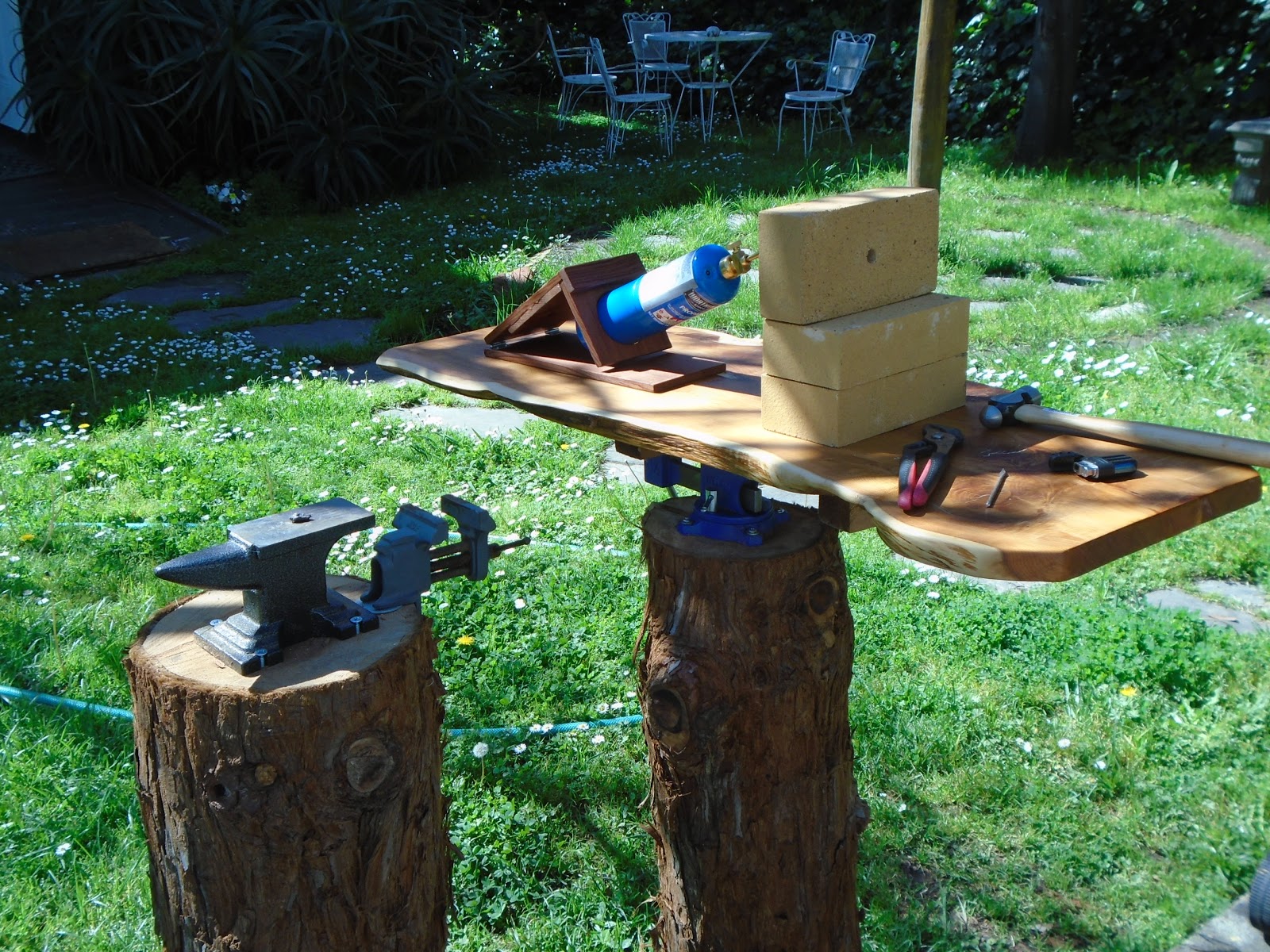
Over the course of the year, I designed and built a little outdoor workshop and smithy where I could try to transform my meteorite into a needle.  I figured that, since everything was on such a small scale, I could make a forge out of a blow torch and a fire brick or two.  All that was left to do was to actually make the needle!  So, the other day, I took advantage of the break in rain and got to work.

It took a day of firing and pounding, and another day of straightening and polishing, heat-treating and oil-quenching, and now I have my very own hand-made meteorite needle!

Slowly taking shape
NOTE: you may be thinking, that needle looks awfully fat to be sticking into people!  Well, this type of needle, called teishin in Japanese, is not meant for insertion.  It functions as a detector and modulator of qi, and achieves its effects by touching the skin rather than piercing it.  This is the style of acupuncture that I practice, as taught by my teacher Anryu Iwashina ("Dr. Bear").


TECHNICAL CONSIDERATIONS:
Final version, with manzanita carrying case.
Composition: This needle is made from a fragment of the Campo del Cielo meteorite that landed in Argentina between 4,000 and 5,000 years ago, and is 93% iron, 6% nickel, with trace amounts of cobalt, iridium, gallium, and germanium.  The cobalt is responsible for the bluing oxidation that occurs at around 900 degrees C; you can see a hint of it on the thicker end of the needle, where I left a cerulean sheen as a reminder of the needle's heavenly origins.

Dimensions: At 2 grams and 6.7 centimeters, my needle is a little lighter and shorter than my gold and silver teishin.  It handles very nicely and gets an instant qi sensation when touched to the skin.

Polarity: Acupuncturists who use teishin may wonder how I determined which end should be the pokey sedating end and which the rounded tonifying end. Unlike the gold and silver of the traditional teishin pair, iron, nickel, and cobalt are all strongly ferromagnetic. These metals lose their magnetism at high heat (called the Curie temperature; about 770 degrees C for iron) and then remagnetize as they cool if they are subjected to an external magnetic field. Since I was heating and cooling the needle in the earth's magnetic field, I made a point of aligning the needle as it cooled on a north-south axis so that the rounded end faces north and is thus  more tonifying. Please note there is some controversy about what the poles of a magnet do, therapeutically speaking, and even about how they are named.  Because I admire his experimental and clinical approach, I am adopting Yoshio Manaka's method and deem the north-facing end (+) to be tonifying.  Personally, I think that needling technique is the more important determinant of what happens in a patient's body during a treatment.  I am not a practitioner of magnet therapy per se, but figured that since my needle will be magnetic by nature, its polarity should be theoretically consistent with the use of magnets in acupuncture.

Thursday, February 20, 2014

Introduction to Way of the Caveman Healer


When I was a boy growing up in western Japan, I liked to explore the hills behind my house.  One of my favorite places, past the junior high school and the bamboo forest, was an archeological site where I would play in the reconstructed prehistoric dwellings of the people who lived in my area a long time ago.  What was life like for them?  I imagined myself as a caveman, making fires, pretending to hunt game and gather greens.  There was a river not too far away, and I would make excursions to wash myself in a small waterfall, to drink the sweet water.  When it got dark I would head home, and as my eyes took in the setting sun I wondered what the cavemen [1] thought and felt when they gazed at the sun or contemplated the starry sky.

Many years later, I studied anthropology as a university student.  I wanted to understand the phenomenon of human beings, why we do the things we do, how we got to be the way that we are.  I would say that the single best thing that came out of my anthropological education is the evolutionary perspective – the idea that we, along with the rest of life on our planet, are constantly evolving: not evolving towards some kind of physical or spiritual perfection (that would be the outdated medieval view, which places humans at the pinnacle of earthly creation and closer to God at every step, as well as the current New Age view, both of which I reject), but simply adapting as a species to our changing environment.  Based on the evidence, I came to the conclusion that the cavemen were basically just like us, minus the cars and supermarkets and iPods.  They were smart, they almost certainly used language, they solved their problems using their large brains and opposable thumbs, just like we do.  I’m convinced that cavemen loved their children just like we love ours.

Growing up in Japan, and through the practice of martial arts, I was exposed at an early age to some of the ideas behind East Asian healing arts – ideas like qi, the universal matter/energy, and tsubo, or places on the body where one could access the qi flowing through the body to affect health.  After college, I became a high school teacher and spent a couple years teaching in a school district that was about to go under, and subsequently (as one of the younger untenured teachers) lost my job.  The pressures of teaching in a moribund school in an intense urban setting, and the trauma of losing my job, left me with the conviction that I should switch careers and help people one-on-one in some capacity.  Encouraged by my taiji teacher, who was an acupuncturist, I ended up getting my master’s degree in traditional Chinese medicine, and became a licensed acupuncturist in the state of California.

I loved school and I continue to love Chinese medicine!  I was fascinated with herbal medicine, with how leaves and flowers and bark and insect parts could affect the human body.  It boggled my mind that over thousands of years, the ancient Chinese healers figured out the properties of these hundreds of substances, and that what I was learning was a body of knowledge that had been passed on uninterrupted for so many generations.  When I first pierced the skin of a hapless classmate with a metal needle I experienced an intense initiatory rush, like I had just stepped into an ancient tradition with roots planted firmly in Paleolithic times.  In fact, as I immersed myself in this healing system whose medical terminology consisted of words like wind, dampness, fire, and earth, I found myself transported back to an earlier time when humans related to their bodies and their environment in a direct way.  By considering themselves to be an integral part of nature, rather than separate from and above nature, the ancient Chinese doctors created a superior system of healing that to this day helps millions of people with their pain, their menstrual cramps, their indigestion, their insomnia, and many other ills.  I am convinced that one reason for its success and survival is that Chinese medicine retains a connection to its prehistoric heritage, that it incorporates the awareness that early humans had for their bodies and their environment, an awareness that many of us have since lost.

Now, don’t get me wrong.  Chinese medicine is a sophisticated rational medical system that has been through continuous refinement since its earliest days.  I’m sure there are practitioners and scholars of Chinese medicine who would take offense at having the word “caveman” associated with this jewel of Chinese civilization.  But I would remind them that from its earliest days, Chinese medicine has looked back to a golden age in which people were healthier and wiser.  Earlier in my career I dismissed this veneration of ancient times as a Chinese cultural trait that only existed to legitimize the present by linking it to a glorious and more perfect past.  Now, I wonder if in fact this backward-looking is a yearning for a time prior to war, prior to agriculture, prior to civilization itself: a distant memory of the time of the caveman.

And, at a fundamental level, it’s hard to deny that the logic and methods of Chinese medicine hark back to the medicine men of old.  In fact, according to Richard Grossinger in his far-ranging Planet Medicine, “It is no exaggeration to think of the Yellow Emperor as one of our only guides to late Stone Age medicine [2].”  Cold stomach? Warm it up!  Hot blood?  Lance the skin to let it out!  Wind and dampness penetrating the hip?  Burn a pile of dried mugwort over it and drive out the evil influences!  When I treat and advise patients, it is easy to find myself channeling some Central Asian shaman, scraping the skin with a water buffalo horn or patiently waiting for the qi to arrive between my fingertips as I hold a gold needle to their skin.

From an anthropological standpoint, traditional Chinese medicine and the other nonconventional healing methods that are so popular today present a cultural critique of our modern world and its healthcare.  So many of our health problems stem from the strains placed on us by modernization.  From the epidemic of metabolic syndrome and diabetes that has resulted from our inability to adjust to the massive influx of sugar and processed foods in our diet, to the host of stress-related illnesses that afflict us because we have to work so hard in highly artificial environments just so we can place a roof over our heads and food on the table, to the disruptions to our delicate endocrine systems due to minute amounts of hormone-like chemicals in our plastic food containers and in the water we drink, we suffer from the consequences of our rapid industrialization and modernization.  When a healer - or a patient - embraces Chinese medicine, he or she admits on some level that there is something wrong with conventional healthcare.  Often, this admission leads to a realization that there is also something wrong with the modern society that produced it, and that produced our bad habits and bad health.

So the common sense health advice of the Chinese medicine practitioner can be taken as a gentle reminder that we should get back to our caveman roots and live more balanced lives.  Simply stated, the Way of the Caveman Healer is an approach to managing the ill effects of civilization to regain your health and sanity.  My hope is that, regardless of your current state of health, the Way of the Caveman Healer will provide you with ideas and tools to cope with the stresses and strains of modern living and help to increase your appreciation and enjoyment of life.


[1] When I write “cavemen,” of course what I mean is prehistoric humans of both sexes.  But “cavemen and cavewomen” is quite a mouthful, and “cavepeople” just doesn’t sound right, so I have it as “cavemen” and “caveman” for the sake of convenience and easy reading.  I am not writing specifically about the Cro-Magnon or the Neanderthals or any other single type of early humans, preferring instead to use the term “cavemen” to refer to prehistoric humans generally.
[2] Richard Grossinger, Planet Medicine: From Stone-Age Shamanism to Post-Industrial Healing, North Atlantic Books, Berkeley, 1980. Grossinger is referring to the Huangdi Neijing, or The Yellow Emperor’s Classic of Internal Medicine, one of the oldest preserved books of traditional Chinese medicine, dating back some 3,000 years.  It still forms the basis of the Chinese medical theory that acupuncturists use today.

Monday, May 07, 2012

A Simple Treatment for Taxol Chemotherapy-Induced Peripheral Neuropathy

About six years ago I started working at a cancer treatment center whose principal doctors, bless their hearts, were open to the idea of their patients utilizing acupuncture as part of their supportive care.  Before I started, I had to attend an interview with the doctors.  One of them asked me if acupuncture could treat peripheral neuropathy.  I wasn't even sure what that was, but automatically replied "Yes!" because I really wanted the job.  Then I went home and read up on neuropathy.  As it turns out, peripheral neuropathy is the medical term for the the numbness, tingling, and pain that can be caused by a number of things, including certain types of chemotherapy.

Sure enough, pretty soon I started seeing patients who complained of exactly these symptoms.  Some got it in the feet.  Most got it in the hands, particularly in the pads of their fingers.  A few got it in their fingernails, resulting in loose nails that seemed like they were on their way to falling out.  Most of these patients were being treated for breast cancer and were on a regimen of the chemotherapeutic agent called Taxol.  A few had other cancers and were on other drugs, such as cisplatin or oxaliplatin.  I tried all kinds of approaches to treat the neuropathy, from standard acupuncture to non-insertive Japanese acupuncture to cold laser to electrostim.  Nothing seemed to help very much.

One day I was inspired to bleed my next neuropathy patient.  In the style of Japanese acupuncture that I practice, we are taught to make a tiny incision and draw a small amount of blood wherever we find "blood stasis."  Typically, blood stasis is indicated by small purplish venules, which we then prick and squeeze to extract a few drops of blood.  But, it occurred to me, the numbness and tingling that characterize peripheral neuropathy could also be symptoms of blood stasis, even with no obvious venules.  So, using a lancet, I bled my next patient, making a small incision near the center of each fingerpad, three or four millimeters from the fingernail.  Quite miraculously, this seemed to work quite well!  In some cases, the neuropathy decreased right there on the table.  In most cases, several such treatments eliminated the symptoms.  Some took longer, and those who had had chemo months or years before and still suffered from neuropathy took the longest.  This technique seems to work well for Taxol but not for the other drugs.  And it works better on the hands than on the feet, though I have had success with foot neuropathy as well.  It is less effective for nailbed neuropathy, even when the causative agent is Taxol (I still do bleed for nailbed neuropathy, though at the corners of the nails rather than on the fingerpads).

I'm not sure why it works, scientifically speaking.  I doubt that it's due to the elimination of toxic chemo agents from the flesh of the fingertips, since the amount of extracted blood is so small.  My suspicion is that the healing is a hormetic effect, which is to say a very small negative impact makes the body respond with a positive effect.  I theorize that the body reacts to the incision by sending chemicals to repel any microbial invaders and heal the wound, and almost as a side effect the affected nerves are also healed.  Perhaps the small capillaries in the extremities are affected by the chemo and work less efficiently than they need to to draw the drug away from the nerves there.  Then, when the skin gets pricked, they perk up and do their job better.

I am not a researcher and have done no true clinical studies on this method, though it would be easy enough to do with a large enough patient population.  But my own experience convinces me that this is a valuable and simple treatment method for Taxol-induced peripheral neuropathy, so I am putting it out there in the hope that it will help many more people.  If you are suffering from chemo-induced neuropathy, I encourage you to try it yourself, or have somebody else do it for you.  Just get a pack of lancets at the drugstore (the kind diabetics use to get a drop of blood), and disinfect before and after with rubbing alcohol to avoid any potential infection (especially if your white blood cell count is low).  Very quickly poke each affected fingerpad, then squeeze out 5-20 drops of blood and wipe with a cotton ball.  Do this a couple times a week for a couple weeks, to give it a fair shake.  Good luck!

Thursday, September 01, 2011

Kiraku: Health and the Take-It-Easy Attitude

Kiraku-An, the "Take-It-Easy Hut"
When people ask me what I consider to be the single most important factor in maintaining health and dealing with disease, my response is simple: Attitude. On the one hand, this may be so self-evident as to not be worth saying (OF COURSE the better your attitude, the better you can handle life and everything it throws your way). On the other hand, it may sound like I’m blaming the victim (“if only your attitude were better you wouldn’t have gotten your illness in the first place”). So I’d like to take a few minutes to explain what I mean.

The fundamental core belief of traditional Chinese medicine is that in health there is flow, and in illness there is a blockage of flow. This “flow” refers to the flow of qi and blood in the body. By feeling the pulse, palpating the musculature, looking at the tongue, and asking a lot of questions, the acupuncturist diagnoses where the flow of qi and blood is blocked, and applies needles to help restore proper flow. This is why patients almost always feel better after an acupuncture session: they are nudged back towards balance, they experience less pain and discomfort, their overall sense of wellbeing increases. This unblocking and rebalancing allows the body to rise to the occasion and apply its own innate healing force to confront whatever health challenge it faces.
What are the things that can impede flow in the body? Traumatic injury certainly can, as can exposure to environmental toxins. Unhealthy foods “gunk up” the system, as do drugs and alcohol. Various diseases cause their own particular stagnations in the channels and organs. But life itself can create stagnation. Stress, worry, chaos are some of the biggest contributors. Stress causes the qi to stagnate, and over time, if the stress doesn’t let up, this qi stagnation goes deeper and turns into blood stasis, turning less energetic and more material. Eventually the blockage can manifest as a physical accumulation – a cyst or lump, or in the worst case a cancerous tumor.

There is certainly a random element in illness; you can do all the right things and still get sick. Nevertheless, it behooves us to do everything in our power to stay well or get well: eat healthy foods, avoid bad fats, exercise regularly, sleep enough, have loving relationships, a supportive community, and a rich spiritual life. But the single most important factor is your attitude, since without the positive attitude you wouldn’t do those other things in the first place!

Another way of looking at it is that the biggest culprit here is modern living. We have to pay our rent or mortgage, we have to put food on the table, we have to raise our children, go grocery shopping, pay the bills, but in order to do all those things we have to work, and that takes up most of our time, leaving precious little time for all the rest. Fitting it all into a 24-hour day and a seven-day week means we get stressed out. Getting sick on top of it all stresses us out even more. What can you do to break the cycle? Not everyone can afford a radical fix, like quitting your job or moving to Tahiti. But what you CAN do, right now, is take a deep breath, let it all the way out, take a break from whatever you’re doing, relax, get some sun on your face and fresh air in your lungs. Sit and enjoy. Maybe chat with a friend, have a glass of wine, share a simple meal. You may not be able to change how the world works, but you can change your attitude towards it.

There is a wonderful Japanese word, kiraku. Kiraku evokes a sense of leisure and enjoyment, of taking it easy and enjoying life. The word is composed of two Chinese characters: the first, ki, is the Japanese pronunciation for qi, energy or breath. The second character, raku, means enjoyment or pleasure. In its ancient form, the pictograph for raku depicts a drum and bells on a stand. So raku (actually its alternate reading, pronounced gaku) also means “music,” as well as the pleasure produced by listening to music. When your ki is raku, when your qi is flowing in a leisurely way through the channels, there is health. I imagine kiraku as the quintessential attitude of the ancient sages, enjoying an unhurried life and appreciating the qi pulsing in their own bodies and in all of nature. The kiraku attitude is the antidote to modern-day craziness. I believe that it is also the best preventative and treatment for all ills. My studio in Santa Cruz is called Kiraku-An, the “Take-It-Easy Hut” or “Qi Appreciation Hermitage*.” Maybe one day you will visit me there and together we will enjoy the music of leisurely qi. But even if not, that’s OK too. Because the beauty of kiraku is that it doesn’t require a doctor, or fancy equipment, or any money: it starts right now, right where you are, with you.


*An, “hermitage,” is an interesting character, consisting of a radical denoting a dwelling, plus a phonetic component consisting of a character meaning something like “to cover.” But a further breakdown of this component yields the image of a man, and below it the ancient Chinese character shen, originally derived from the image of two hands extending a rope, and therefore the idea of extension or expansion. And, indeed, a hermitage is a dwelling where a man sits in contemplation until he feels a sense of expansion. I prefer an alternate version of the an character, and a different interpretation: the dwelling radical is replaced with the grass radical, giving the image of a rustic thatched hut. And the character shen has long been associated in Chinese cosmology with the ninth of the twelve Earthly Branches, symbolized in the popular Chinese “zodiac” as the Monkey. So the hermitage (or at least my hermitage) is a place where a person (the human figure with arms and legs akimbo, in the middle) can ingest medicinal herbs (the grass radical on top) and enjoy the easy-going life of a monkey (the shen character, on the bottom, with its tail curving out towards the right). Or, if you prefer, the hermitage is a hut where a monkey sits down, and, expanding his consciousness, becomes a man.

Monday, February 28, 2011

In Memoriam: Gus Turpin 1963 - 2010

I first met Gus sixteen years ago as a first-year student of traditional Chinese medicine at Five Branches Institute in Santa Cruz, California. He was a couple years ahead of me, and with his long flowing hair and imposing stature (Gus is well over six feet tall), he made quite an impression. But what impressed me more was the depth and breadth of his knowledge. One afternoon during that first year of school, Gus led an herb walk in the alleys around the school. From the gnarled albizzia tree that greeted me every morning as I arrived for class, to the tenacious passionflower vines that took over entire neighborhoods and astounded passers-by with their blooms of alien ultraviolet, to the humble prunella that grew on the edges of dusty walkways, Gus knew the medicinal uses of all these plants. As a newbie to the world of herbal medicine, I was surprised first of all that these plants I had taken for granted had medicinal uses at all, and secondly by how much there was to know about them! For Gus possessed an encyclopedic knowledge of healing plants, and his unrehearsed lectures gave me a first glimpse of how his mind worked – synthesizing Chinese energetics with biochemical understanding and mixing in a dollop of Ayurveda here and a tidbit of medieval alchemy there.

As I got to know him better, I came to understand that Gus’ mastery of herbs came from his own intense curiosity about the world. His passion was the rich, deep realm where mind, spirit, and plants overlap and interact and play. His company, Shamanic Tonics, specialized in “spirit herbs,” and each and every one of his formulations was only offered up to the public after rigorous in vivo testing conducted on himself (and his lucky friends!). I remember one day Gus announced, quite dramatically for him, that he had “tamed the wild mahuang!” Back in those days ephedra was still legal, though the FDA was taking an interest in it due to a few unfortunate incidents in which people had abused it as an “herbal upper” to the point of death. Gus wanted to tone down mahuang’s stimulant properties, and hit on the combination of mahuang and reishi (a spirit-calming and immune system stimulating medicinal mushroom) to do just that. I remember some really fun and interesting hikes trying out that stuff. It came to market as Fungalore, and became quite the hit at dances and parties before mahuang was banned.

Gus was a very spiritual guy, a true seeker, whereas I was and am more of a skeptic. Yet, we had great discussions about everything from Tibetan Buddhism to Shinto animism to Amazonian shamanism. Regardless of our fundamentally different orientations, we shared a deep interest in religion and consciousness. I took an anthropological interest in history and religion as a record of humanity’s attempts to understand the world; for him spiritual traditions were a practical guide for his own explorations of mind and nature. He revealed to me once that he thought we had known each other in a past life. Though I would ordinarily shoot down such a statement in my usual rational way, at the time I paused and savored it, because I had to agree that we shared a bond that, whether or not it involved reincarnation, demonstrated some kind of karmic connection that I could not deny. And, not insignificantly, I took it to mean that he considered me his friend, and that made me happy.

In the years after we finished our master’s degrees in Chinese medicine, Gus moved away from Santa Cruz, settling in Northern California near Mendocino. I think the slower pace of life and immersion in lush forest suited him well. We kept in sporadic touch by email and phone, and every now and then I’d find a package in the mail stuffed with fresh matsutake (Gus and I shared a love of mushrooms), or a sample pack of a new herbal formulation, or an article on kanna or blue lotus or whatever else was occupying his interest at the time. This was typical of Gus: so generous, so giving.

Some years ago Gus gave me a piece of writing he had authored. It was about his fascination with the young god Dionysus. I wish I had kept it, so I could read it over again in my effort to understand him better, to try to understand why he is gone. Because I still don’t understand. I saw Gus a couple of months before he died. We went on a hike in the Berkeley hills with our friend Andy. He was in the process of moving from Mendocino to the Bay Area, and was excited about some new prospects for his company, about reinventing himself and his business. He seemed content. We had a great time; it was like old times, Andy driving like a crazy man, Gus with his long stride leading the way as we hiked, pointing out flowers, talking about plants. He would have made a really great teacher at any Chinese medicine or naturopathic school.

Soon after we became friends, Gus gave me a baby gotu kola plant. Gotu kola is an Ayurvedic herb that is revered for its effects on the brain and nervous system, circulation, and skin. It has since become one of my favorite herbs. Gotu kola is easily propagated, as it spreads runners that put down new sets of roots and establish babies that can be dug up and given away. Over the years I have given away many such babies, to friends and patients, as well as tinctures and teas that I made from the harvested plant (I’ve eaten quite a bit of the fresh leaf as well). I think of the gotu kola as Gus’ good influence, spreading outwards in an infinite web, doing good, humans and plants working together for the betterment of all. Like I said, I’m not so sure about reincarnation. But if anybody would consciously reincarnate as a plant, it would be Gus. Perhaps his consciousness is spreading through the world as gotu kola. Perhaps, every time I take a nibble, I re-enter that Dionysian wave. Perhaps, as I graze, I will get my friend back, just a bit at a time, in subtle explosions of metabolism and neurology, as plant and mind merge and my grief (I hope) slowly diminishes to be replaced entirely by a love and appreciation that grows only deeper with time.

Tuesday, August 04, 2009

The Hokey Pokey: Acupuncture, Placebo, and the Persistence of Bias

Title of the front page article in the July 2009 ACUPUNCTURE TODAY: “Acupuncture Found Effective for Back Pain: Study finds it superior to usual care.”

Title of a June 1, 2009 article in NEWSWEEK by science writer Sharon Begley: “Hooked on a Feeling: This is your brain on a placebo.”

Believe it or not, these articles report on the exact same recent acupuncture research. As their titles reveal, they reach basically opposite conclusions. The research in question, conducted by Daniel C. Cherkin et al and published in the Archives of Internal Medicine, May 11, 2009, under the title “A Randomized Trial Comparing Acupuncture, Simulated Acupuncture, and Usual Care for Chronic Low Back Pain,” utilized a cleverly constructed experiment to try to determine whether acupuncture was effective as a treatment for low back pain. 638 adults with chronic low back pain were split into three groups. One group received “individualized acupuncture,” in which the acupuncturist could use any points he or she wanted, as long as the patient was lying prone. The second group received “standardized acupuncture,” an eight-point combination consisting of the points Du-3, UB-23, UB-40, K-3, and a low back ashi point (an excellent prescription, though the ashi point, referring to a tender point, makes this “standardized acupuncture” somewhat individualized to my mind). The third group received “simulated acupuncture,” or, as acupuncture detractors prefer to call it, “sham acupuncture.” In this group, the patient would lie face down as in the other groups, and the acupuncturist would press an acupuncture needle guide tube against the same points used in the “standardized acupuncture” group, then simulate needle insertion by tapping a toothpick gently against the patient’s skin. None of the patients in any of the groups knew which group they were in, and, presumably, all thought they were receiving some kind of acupuncture. All patients received ten treatments over seven weeks, and outcomes were assessed after eight, twenty-six, and fifty-two weeks using the Roland-Morris Disability Questionnaire and a 0-10 range “symptom bothersomeness” scale.

Much to the delight of acupuncturists everywhere, the results showed that acupuncture “improved function and decreased symptoms,” and, furthermore, the improvement was significantly better than that resulting from usual care, even one year later. Interestingly - and here is the crux of the dispute between the pro- and anti-acupuncture camps – it didn’t make a difference whether a patient received “real acupuncture” of the individualized or standardized variety, or whether they received the non-penetrating “sham acupuncture.”

Now, this is food for thought. It is quite easy for the acupuncture-uneducated reader to leap to the conclusion, as NEWSWEEK’s Begley does, that “the most parsimonious explanation for that finding is inescapable: it is possible to think yourself out of pain.” In other words, if sham acupuncture works as well as real acupuncture, then all acupuncture must work because of the placebo effect.

Let me make my own bias clear: I am an acupuncturist. I believe that there is something going on other than mind over matter when I treat my patients and they get better. I think that acupuncture is a connective tissue therapy par excellence, and that the traditional East Asian approach to treating the human body’s ailments via the skin and connective tissue is far more sophisticated than the cutting edge of conventional medicine.

That said, I believe that there is also something to the whole placebo thing. Of course the placebo effect is part and parcel of how acupuncture works! Placebo effects are part of how any healing method works. It is a credit to the ancient Chinese doctors that they incorporated into their medicine methods that improve clinical outcomes through, to use the medical lingo, “nonspecific effects.” Yes, it helps patients to listen to them! It helps patients to palpate them, to look at them, to spend more than five minutes with them! My hope is that one of the outcomes of placebo research is that conventional medicine will reincorporate some of these things, to give it a softer edge, more compassion, less arrogance, and yes, better outcomes.

It appears to me that acupuncture has reached a tipping point in modern society. There are so many people who have benefited from acupuncture that it is simply getting accepted by the mainstream as a viable therapeutic method. Acupuncture poses a challenge only to those hardcore skeptics who cannot stand the thought that a method utilizing unscientific concepts like “qi,” “the five elements,” and “yin and yang” could possibly work. Their disbelief of acupuncture is akin to someone refusing to believe that a samurai sword can cut because their fundamentalist mind takes issue with the Shinto ritual that dictated the ancient swordmaker’s forging. Such people seize upon a study such as Cherkin’s as proof that acupuncture only works because patients believe that it does. They fail to consider alternate explanations, even though the authors of the study themselves spell out the possibility that “superficial acupuncture point stimulation directly stimulates physiological processes that ultimately lead to improved pain and function.” The research of MacPherson et al with functional magnetic resonance showing that superficial and deep needling elicit similar blood oxygen level-dependent responses in the brain suggest as much (Neuroscience Letters 434, 2008).

My strong suspicion is that acupuncture works not through a single mechanism but through multiple mechanisms. Something very physical happens when you insert a needle through the skin and tap at the surface of a myofascial trigger point until it releases with a palpable and visible fasciculation. Other acupuncture techniques are more “energetic” and mysterious but equally effective. There are entire schools of non-insertive acupuncture that rely on the practitioner feeling a pulsation or tingling where the needle meets the skin (the patient often feels something as well) to assess its effects during a treatment. I believe that this type of acupuncture is a means of interacting with a primitive electrical signaling system that utilizes the body’s connective tissue as a conductive direct current network. Deep needling may or may not utilize the same mechanism to produce its therapeutic effects. Ear acupuncture most likely utilizes yet a different mechanism – probably neural. For Sharon Begley or any other skeptic to decide for the public what “real acupuncture” is represents the height of arrogance. Perhaps there are many types of “real acupuncture,” and “sham acupuncture” is actually a type of real acupuncture!

There is an excellent quote in the book Herbal Emissaries by Steven Foster and Yue Chongxi, in which the authors state (about ginseng, not acupuncture): “Chinese researchers…have focused on how ginseng works, whereas western researchers focus on if it works. This reflects a fundamental difference in research approaches between the East and the West. In Asia, the efficacy of an herb is already established in a cultural context. In the West, we presuppose that traditional uses have no rational scientific basis.” The same could be said for acupuncture. There are already plenty of studies showing that acupuncture is effective for back pain, or nausea, or whatever. It’s great that these clinical studies are getting more sophisticated. But as the response to the Cherkin group’s research shows, people read into these studies what they already believe. The Acupuncture Today article never once uses the word “placebo” in discussing the possible interpretation of the results, and the NEWSWEEK article never once entertains the possibility that acupuncture works by a mechanism other than placebo.

I wish that instead of these sorts of studies, and in addition to better and more placebo research, scientists would do more basic research into how acupuncture actually, physically, works. It’s hard to argue with fMRI imaging that shows that the needling of points associated with the treatment of vision disturbances lights up the visual cortex of the brain (as Cho et al report in PNAS, vol. 95 no. 5, 1998), or that needle twirling at acupuncture points results in mechanical signal transduction in the connective tissue with far-ranging effects (Langevin, in the Journal of the Federation of American Societies for Experimental Biology 16:872-874, 2002).  I predict that the next generation of acupuncture research will demonstrate that acupuncture turns specific genes on or off to achieve its effects - and that these studies will be done on (presumably unbiased) non-human mammals.  I don’t feel any particular need to validate what I do to skeptics. I’m quite comfortable with the witch doctor element in what I do, and it’s good enough for me that my patients are satisfied with the care they receive. But I do realize that strong scientific evidence would ultimately result in more people benefiting from acupuncture. And I think that fundamental research in the biophysics and biochemistry of acupuncture would serve this end better than clinical research, which somehow just seems to strengthen one’s bias, whatever it might be. Perhaps I am being naïve, and no amount of studies will convince either camp that the other is wrong. For some reason acupuncture rubs some people the wrong way much like astrology or intelligent design do. But I predict that, with or without studies, acupuncture will continue to gain acceptance simply because more and more people are benefiting from it and its usefulness is becoming a matter of conventional wisdom in the same way that people accept the validity of many surgical procedures that have never been tested but continue to be used because of their self-evident efficacy.

If the placebo effect is hokey, then there is something hokey about acupuncture. The placement of needles at acupuncture points, with or without penetration of the skin, is certainly pokey. There is a magic that happens between the mind and the body, and between two interacting human beings, that unites and transcends the hokey and the pokey. That magic is called “healing.” When it comes to healing, maybe the Hokey Pokey IS what it’s all about. Just put your left hand out and I’d be happy to show you.

Tuesday, December 05, 2006

Doing Acupuncture

Doing acupuncture is kind of a funny thing. What points do you pick? What is the process you go through when you give someone a treatment? You'll get a lot of different responses if you ask different acupuncturists. Here's mine:

For me, acupuncture has become a kind of energetic interaction with the patient. A person will come in with some symptom - a headache, for instance, or a skin problem. I usually spend some time asking questions: what part of the head hurts? Does your itching get worse at night? Is it worse or better when you get your period? Etc. I usually look at the tongue and feel the pulse, both standard Chinese medical practice. I was trained in acupuncture school to come up with "patterns" based on the presenting evidence, then treat by using points that fit the pattern. For instance, based on the location and type of pain, you might decide the patient has a "dampness headache," and pick points such as Stomach-40, which drains dampness, and Large Intestine 4, which alleviates pain especially in the face and head. You might also throw in Spleen 3, which strengthens the digestion, thereby treating the "root" as well as the "branch" (weak digestion is thought to create "dampness" in the body).

What I have found, however, is that this type of cookbook acupuncture often doesn't work. What has happened historically is that in the re-packaging of "traditional Chinese medicine" (TCM) in the modern era, acupuncture took a back seat to Chinese herbal medicine. So much so that acupuncture, which has always had its own set of theories and classical writings associated with it, got reformulated to better fit the theories of herbal medicine. So acupuncture points, which had formerly been thought of as apertures through which one could drain or supplement qi ("energy") to restore balance in an interconnected series or loops of channels in the body, were assigned functions or actions much like herbs. Hence in TCM we now say that Stomach 40 "drains dampness," much like a diuretic herb such as alisma is said to "drain dampness."

It was only after graduating from acupuncture school that I regained a sense of wonder and appreciation for acupuncture. This was because I began studying with Dr. Anryu Iwashina (a.k.a. "Dr. Bear"), a blind master acupuncturist from Morioka, Japan. Dr. Bear challenged my entire concept of acupuncture by treating patients - quite spectacularly and effectively, I might add - without ever puncturing their skin with his needles. At first I couldn't really tell what he was doing. With one hand he would feel the patient's skin on the arm or belly,and the other hand would gently hold the needltip against the skin somewhere else. Sometimes he would stay at a point for a long time, as if waiting for something to happen, holding the tip with his index finger and thumb, and the shaft with the thumb, index finger, and middle finger of his other hand. Other times his hand would dance over the surface of the patient's skin, the needle gently tapping the skin over a large area. Sometimes he would hold a thick golden needle on one point and a thick silver needle on another point, and wait. The impression I got was that he was constantly trying things out, waiting for a response, then moving on. Suddenly, he would announce that he was done, and the patient would get off the table with an amazed look on his or her face.

I've been studying with Dr. Bear for about ten years now, and use his method about 90% of the time (I still use TCM methods of physical medicine such as scraping and cupping, as well as TCM-style herbal medicine). It took me a couple years of trying his technique before I really felt anything happen between my fingertips. I was treating a patient who suffered from breast and liver cancer. She was going through chemotherapy and different experimental drugs, and I was fortunate enough to be able to join her inspiring support team. Maybe it was because she had gotten so weak that the "noise" of her various bodily processes was less than it normally would have been. Or maybe it was because in the process of preparing for death she had become so energetically "clear" that that clarity of energy could be felt even by a beginner like me. In any case, when I placed the needle against her skin, I felt a faint tingle, a mild electrical tingle that came and went, signifying according to Dr. Bear that the "qi had come."

So I've been practicing this way ever since. I haven't abandoned the theories and "patterns" that I learned in school. But I consider them working hypotheses rather than diagnoses per se. I test these hypotheses by trying out different points, and seeing if something happens. That something can be the tingly feeling that I feel between the fingertips holding the needle; it can be the patient reporting feelings of movement or warmth or tingliness at the point or elsewhere in the body; it can also be a shift in the patient's pulse or a relaxing of her musculature.

I find that the best acupuncture happens when I just "play", when I don't attach to outcomes or to particular theories of what is going on. I may notice a tight area, and needle there. The patient reports a warm flowy feeling down the leg and into the big toe, so I palpate the ribs and umbilical area (which are associated with the liver and spleen, whose channels run down the leg and into the big toe) and check points on the liver and spleen channels. While I'm working on the leg,I might notice that the whole right leg is sort of stuck, and begin pushing muscles and points and joint edges around the knee, working my way up and ending up treating stuck points in the hips and sacrum. I often end up doing something completely different from what I set out to do, following the thread until what needs to happen happens.

Sometimes, especially if I'm feeling stuck, I'll over-intellectualize things and start applying models like crazy, like "now that I've drained the gallbladder connecting-point I'll tonify the spleen source-point," or "let's try that right knee point for this left elbow pain." And that can be fun too, and the theories that have been worked out over many centuries of observation and experimentation are truly useful and sometimes work great. But what I have learned from Dr. Bear is that you always have to try things out and check for an effect; don't just apply theories blindly and then leave the room to put together an herb formula. And I think that the best treatments happen when you leave the theory behind, or just leave it running in the background as a kind of hunch-provider, and act spontaneously. It's also more fun that way!

That's why I have so much fun doing acupuncture. Each treatment is an exploration. If I find small "blood stasis" venules I might bleed them. If I find a mushy deficient spot I might burn moxa on it. If the patient reports a new pain I'll try out different things until the pain goes away. I get to combine hands-on experimentation with rational problem-solving and a kind of artistic sensibility. And best of all, I get to experience my patient feeling better!

I've benefited so much, and I believe my patients have benefited too, from Dr. Bear's teachings. Acupuncture is a very mysterious thing, and when acupuncturists start talking about "energy" and "yin" and "yang," it's easy for Westerners to dismiss it as hopelessly unscientific. And, indeed, if acupuncturists memorize the Chinese theories and terminologies by rote and spout them to whomever will listen, they will only serve to confuse and alienate people. But I don't think that we should do the opposite, namely talk about acupuncture only in scientific terms such as endorphins or the gate theory of pain. I believe that when we scientize acupuncture, we substitute a rich living empirical tradition with an incomplete and clinically inferior model. Certainly we should research acupuncture and try to figure out how it works. But if you want to learn acupuncture, I say, learn from a real acupuncturist! I consider myself fortunate that I have been able to do just that.


Saturday, July 15, 2006

Martial Arts and Medicine

In previous posts I have written a little about martial arts and a lot about medicine. Here I’d like to explore the connections between the two. The most obvious connection is that the practice of martial arts comes with the occurrence of injuries, and the treatment of those injuries requires some sort of medical knowledge. Because the major martial arts developed in East Asia, the treatment of martial arts injuries tends to utilize the methods and theories of traditional Chinese medicine – especially acupuncture, massage, and medicinal herbs. Conversely, martial artists throughout history have contributed to the medical arts of Asia their own field-tested methods and formulas, so much so that a large part of traditional East Asian traumatology – the treatment of bone, tendon, and sinew injuries – can be said to be descended from martial arts traditions. The various Shaolin lineages of China are the best-known example, with their "dit da jow" trauma liniments used by martial artists wordwide. Much of "tui na" (traditional Chinese massage and physical therapy), especially bonesetting techniques, co-developed with martial arts as well. In Japan, there has also been a close historical relationship between martial arts schools (especially styles of jujutsu) and bonesetting, and wandering martial artists in search of teachers to study with (or to challenge!) would look up the bone doctors when they first got to a new town.

Because of their common cultural origins, martial arts and traditional Chinese medicine share a common terminology and worldview. Most importantly in this regard, they both take as a fundamental premise the existence of qi, the life force. Qi, also known as “ki” in Japanese and Korean traditions, is thought of as the animating principle in all life, indeed in the whole universe. It is qi that the acupuncturist affects as he inserts fine needles into the channels or meridians through which the life energy flows. It is this same qi that is affected in a martial arts strike to a pressure point. The exact same point can be used to hurt or to heal; what varies is the amount and direction of qi flow through the point. It is said that the ancient sages sat in contemplation and felt the life force flowing through their bodies. From their initial observations developed three interrelated studies: martial arts, medicine, and meditation.

My own introduction to traditional Chinese medicine came through the martial arts. I grew up in Japan, and attended the local judo dojo since I was seven years old. The way we trained in those days was basically free play, or “randori,” all the time. We would get a partner, bow, and go at it, trying to throw our partner to the tatami-mat ground. At our teacher’s command, we would switch to ground-fighting: after the next throw, we would try to pin each other. After about age twelve or so, we were allowed to incorporate chokes into the ground-fighting. Most of the time, the person being choked would tap out and nobody got hurt. But every once in awhile, someone would lose consciousness, and our teacher would revive him. He would use the resuscitation techniques known as “kappo”, and the unconscious student would promptly revive. My interest was piqued.

As a teenager, my family moved to Southern California, and I had the great fortune to study with Joo Bang Lee, the grandmaster of a Korean martial art known as hwarangdo, and with his eldest son Henry Taejoon Lee. Grandmaster Lee is also an acupuncturist, and it was from him that I received my first acupuncture treatment, after a wrist injury sustained at a demonstration. I was fascinated with this exotic healing art, and by the fact that in its advanced levels hwarangdo incorporated "kookup hwal bop" (acupuncture for resuscitation), "chim goo sul bop" (acupuncture for the treatment of disease), and "jyub gol sul" (bonesetting). During the course of training I learned several first aid techniques, such as pressing the middle knuckle into the acupuncture point Du-26 between the nose and upper lip to revive an unconscious opponent, and slapping (or jumping on) the point Kidney-1 on the bottom of the foot, for injuries to the testicles.

Finally, when I was in college I studied taijiquan for a few years. My teachers, Tsuei Wei and Jim Douglas, were both licensed acupuncturists. With taiji I was introduced to the idea that martial arts techniques themselves – movement and breathing – could be healing. In judo we didn’t talk much about ki, and in hwarangdo we practiced techniques to develop and circulate the ki but didn’t really incorporate it into our martial arts techniques (except for breaking techniques, which were basically an extension of “kihap chagi” ki coordination methods). But taiji was different – in taiji, it was all about qi. With taiji it all came together for me, and I began to see the human body not as a conduit through which a mysterious energy flowed, but as a kind of concresence of energy itself. If energy and matter are a continuum, then qi is something more on the energy end of the spectrum, and blood and flesh are more on the matter end. But it’s all the same stuff, and acupuncture is more about affecting the body from the energy end, and herbs are more about affecting it from the matter end. It was ideas like this, plus the persuasion of my teacher Jim Douglas, that made me consider acupuncture as a career.

These days, I am not as active as I once was, and no longer practice martial arts regularly. But it gives me great satisfaction to watch my son Lukas train under instructor Michael Laird of Laird’s Academy of Martial Arts. Instructor Mike teaches ho kuk mu sul, a style that is very similar to the hwarangdo of my youth. Training in martial arts has improved Lukas’ coordination, memory, and motivation, to say nothing of the self-defense skills he is learning. It might seem ironic that an activity that produces injuries is actually health-promoting, but in fact the practice of martial arts does improve health. There are the obvious cardiovascular benefits from the aerobic exercise aspect of training. There are the benefits to bone and muscle from all the stance work, blocks, kicks, and strikes. The qi gets a workout from the "kicho chagi" breathing techniques. All the stretching keeps the body limber. The entire body gets conditioned from the "nak bop" falling techniques. Perhaps most importantly, martial arts training produces an attitude of calm confidence and in-the-moment awareness that counters the stresses and ills of our modern lifestyle and lets us face life with courage and balance. So if you are a martial artist, I would be honored to treat your injuries and illnesses using the techniques of traditional Chinese medicine. But you should know that you are already doing something far more important for your health: you are treating yourself daily by training in the martial arts. And if you have no experience in martial arts, you may want to start - it's good medicine.

Monday, March 20, 2006

After the Flood

I had a very vivid dream last night, in which I was visiting my friend Greg Livingston, who is working on his doctorate in Chinese medicine in China. In my dream, I was sitting in the back of a large classroom. Everyone, including me, was wearing black uniforms kind of like Japanese high school kids wear. At the head of the class was a senior student, who pretty much ran the class. To the side of the class was a large vat bubbling on a gas flame. I asked Greg what it was, and he explained that it was boiling oil, "in case we get attacked."

Like I said, it was a very vivid dream, down to the detail of Greg giving me a pinch of some freeze-dried pickled mustard greens - very delicious, with that yummy MSG flavor that most Asian prepared foods have. The dream was so vivid that it woke me up, and kept me up, my mind racing. I had this sudden appreciation for learning, for scholarship, for universities, for the accumulation of knowledge that they represent. When people go to school, they join a stream of knowledge that has continued onward from the earliest days. And, if they go on to earn their higher degrees, to publish and teach, they continue the stream, and even create their own rivulets of knowledge that continue on. There are thousands, no, millions, of these rivulets squirming into the future, streaming repositories of our civilization's knowledge. It doesn't matter that many of these rivulets are utterly trivial (does society really benefit from another doctorate on the poetry of Lionel Ray?). Surplus has been the luxury and the fuel of civilization ever since agriculture, and our surplus of knowledge is a mark of the richness of our civilization.

Maybe our universities are worth defending with boiling oil. When the jihadists come rolling in, after Tel Aviv is nuked with Iranian weapons and we destroy Mecca in retaliation, after they open an Al-Jazeera station in LA but before they visit Vegas, they will surely come after our universities. After all, they are citadels to infidel blasphemies. Arm the undergrads, I say! Or maybe the graduate students - they're less likely to riot in peacetime.

It may never come to that, of course. It may be global warming that does us in, or the dreaded bird flu gone airborne. Whatever it ends up being, the universities should prepare. There should be a federal mandate that each university create a 100-DVD set, "Essentials for rebuilding apres le deluge." It would force researchers and academics to focus on stuff that'll really come in useful later, and break it down so people other than their proteges can understand it. You know, things like how to make a photovoltaic cell. Or basic obstetrics. How to build a house. Permaculture. Things like that. Keep all the rest, too, if you can. But in the little black box, put the 100-DVD set along with a few solar-powered DVD players. I would've said, "A hundred-volume encyclopedia," - you know, books - but you never know, the survivors might be unable to read.

I like to think that, if we have to rebuild from scratch, we'll come to appreciate not just the millions of rivulets we have lost, but some of the deep and ancient rivers that have persisted. Like the Chinese medicine that Greg is studying in Hangzhou. In order to earn his doctorate, Greg may very well have to create an obscure rivulet and write a monster thesis on "The Effects of Microcurrent Electroacupuncture on Mouse Cowper's Gland Contractions," or "Analysis of Verb Usage in the Huang Di Nei Jing." But, more importantly, he will be thoroughly trained in a tradition that treats sick people with a minimum of technology, that will benefit humankind even after the infrastructure is gone. I like to think that, after the flood, barefoot doctor acupunks will be scurrying among the rubble, quelling infectious disease with their homemade extracts of coptis and isatis, treating the injured with their thin metal needles, telling the survivors that it's all going to be OK.

Wednesday, October 19, 2005

The Virtues of Gentle Exercise

East Asian medicine, always ahead of its time, has long stressed the importance of exercise when it comes to maintaining health. Yet, with our culturally-conditioned preconception of fitness as having to do with aerobic exercise and its cardiovascular benefits, it is easy to dismiss Chinese health exercises, at first glance, as soft and ineffectual.

I remember when I was eighteen or nineteen, my roommate introduced me to a Chinese health exercise known as Ba Duan Jin, or the Eight Pieces of Brocade. As a longtime martial artist who was accustomed to doing "real exercise" with exciting leaps, spinning kicks, and sparring that got you real sweaty and tired, I smiled to myself as we went through the eight gentle calisthenics. There was one where you raise your arms up over your head, palms to the sky, as you breath in. In another, you stand in a low horse stance while turning your torso sideways and making a motion like you're an archer pulling a bow. Another one has you stand straight and gently turn your head from side to side. You get the picture: boring!

I dismissed the Eight Pieces of Brocade as a useless exercise that fell in the same category as the calisthenics that you see old Asian people doing in the park in the early morning, forming a big circle around the pile of their backpacks and thermoses, circling the wagons so gui luo thugs can't steal their belongings.

Years later, when I was in acupuncture school, I was re-introduced to the Ba Duan Jin by a wonderful kung fu teacher named Linda Darrigo. As an earnest student of traditional Chinese medicine, I practiced faithfully, paying more attention to my breathing and the movement of qi (internal energy) within my body in the hope that this would make me a better doctor. But, as I got caught up in the excitement of treating patients in the student clinic, my interest waned and I stopped practicing the exercises.

Now that I'm pushing forty and discovering that my body doesn't maintain its elasticity all by itself, and that injuries that would have fixed themselves ten years ago now stick around for months and turn into chronic pain, I have developed a new regard for the Eight Pieces of Brocade. I'm realizing that there is great wisdom in this type of exercise that moves every body part in a gentle manner but with a big range of motion. You see, as we get older, we tend to settle into a very limited range of movements. If you're like me, you very seldom have to reach your arm higher than the level of your shoulders in your daily life. It's no wonder that people get "Fifty-Year Shoulder," if they've stopped moving the shoulder joint through its natural arc. The same is true of all our other moving parts, but especially our backs because with our sedentary lifestyles it's just as easy to stop moving the back through its range of motion as it is the shoulder. How often are you doing something other than sitting, standing, walking, driving, or lying down?

Doing your daily Eight Pieces of Brocade, with their gentle flowing, twisting, and bending movements, can really help to combat the stiffening that comes with age and inactivity, and the injuries that come with that stiffening. Come by the clinic sometime and I'll show you the movements. If I get my shit together I'll even have a handout for you to refer to when you do them at home. Aside from the value of the exercises themselves, there's something very healing about starting each day with some fresh morning air and the day's first light on your face, your body and mind waking up as the world wakes up around you.

Monday, October 10, 2005

On Acupuncture

My first exposure to acupuncture was when I was sixteen years old. As a youth I was a gung-ho martial artist, and my instructor’s father, the grandmaster, also happened to be an acupuncturist. We did a lot of demonstrations, and, as a senior student I usually got to be my instructor’s fall guy. At one particular demo, I took a rough fall and watched my right wrist swell up. When we got back to the training hall, the grandmaster stuck a few needles in my wrist and hand, and (more interestingly, I thought,) in my uninjured left ankle. The pain and swelling went away.

Most people, by personal experience or through success stories like mine, are familiar with acupuncture as a method of inserting needles into the body to control pain. As a licensed acupuncturist, I am happy that acupuncture has helped so many people with their pain. As a direct result of its obvious clinical efficacy, my profession has reached an unprecedented level of acceptance and popular appeal. However, because of the focus on the treatment of pain, acupuncture’s other benefits remain virtually unknown in the popular culture.

Most laypeople, for instance, don't know that acupuncture tends to induce a mildly altered state. Typically, patients receiving an acupuncture treatment will get very relaxed. Some experience a streaming of energy, felt as tingly or bubbly sensations in different parts of the body. Others fall into a deep sleep. I half-jokingly tell my patients that the reason acupuncture makes them feel better is that it pins them down for a half-hour rest which they otherwise would not take. I do believe that acupuncture is an excellent form of stress reduction, and that because so many modern diseases are directly or indirectly caused by stress, they are helped by regular treatment.

But acupuncture’s complex and subtle effects in treating a wide range of diseases cannot be explained away by stress reduction. So how does it work? The Chinese postulate a kind of vital energy, called qi, that drives all of our life processes. Qi is said to flow through the human body in distinct pathways called channels or meridians. The channels connect not only to each other, but to organs and tissues within the body as well. When the body is diseased, the flow of qi is disrupted. Acupuncture, quite simply, is the use of needles to un-block stagnant qi in the channels. With the qi flowing smoothly in the channels, the organs regain their optimal function, and health is restored.

As intuitively correct as the Chinese medical explanation may sound, it is somehow not satisfactory to the Western scientific mind. After all, what is this qi? And what are these channels that have been so neatly mapped out? They certainly don’t correspond to known anatomical structures*. It is not surprising that scientists have for many years pooh-poohed acupuncture, considering that it is based on a mysterious “energy” that does not correspond to blood, or electricity, or any equivalent concept in modern science.

My own suspicion is that qi is not a hitherto unmeasured energy, but a convenient cultural construct that explains observable reality and informs all traditional Asian arts. My experience of life acknowledges a vitality that flows through me, and I practice Chinese medicine as if qi exists, but at the same time I cannot help but wonder what is really happening when I stick a needle in someone’s flesh.

I speculate that acupuncture’s effects are best explained by the same mysterious process that guides the development of an embryo. Our bodies can be thought of as very large colonies of single cells, descendants of the fused sperm and egg that was the original Big Bang of our personal existence. Out of this singularity, our cells differentiated, unfurled to form distinct tissues, organs, limbs. How did they know where to go, what to become? What coordinates the whole thing? Who’s running the show? At this point the rational mind breaks down and we invoke God, or qi, and simply marvel at the mystery of it all. But my hunch is that the original connections are not lost, that in its streaming the embryonic protoplasm leaves very fine trails, that far flung cells continue to communicate, and that the acupuncture channels are the functioning remnants of these gossamer trails and communication lines. When communication breaks down, illness results. The application of needles at the right places somehow, perhaps by affecting subtle bioelectrical or biophotonic signals, restores communication and health.

While my intellect strives to understand acupuncture scientifically, as a practicing acupuncturist I find the old Chinese worldview the most satisfying. The ancient Chinese described the body as a microcosm of the world. Just like the terrestrial landscape, the human body consisted of mountains and rivers, marshes and plains. To this day we use acupuncture points with names like yongquan, “Bubbling Spring,” and zhongzhu, “Middle Island.” It was the job of the acupuncturist to maintain the ecology of the human landscape, by draining this ditch or setting fire to that hill. It’s a pity for this rich profession to be reduced to being medical technicians or pain therapists. My hope is that more and more people will use acupuncture not just to make pain go away, but to get (or stay) healthy and explore their human existence in a deep and immediate way.

*Post script, 2017: it appears more and more likely that the channels are functionally relevant groupings of fascia, which fits all the criteria necessary to fulfill the role of acupuncture channels.  Fascia is electroconductive, and it is a connector in a number of important ways.  It is reachable from the surface of the body at the acupuncture points, connects parts of the body that are far apart from each other, and it also connects down to the cellular level, where it is continuous with the cytoskeleton, through which it may affect cell signalling and the turning on and off of genes.